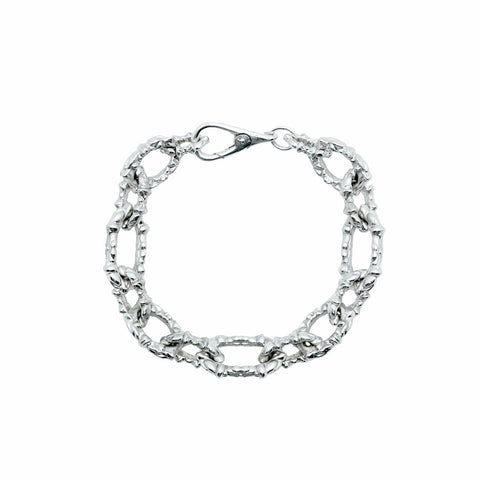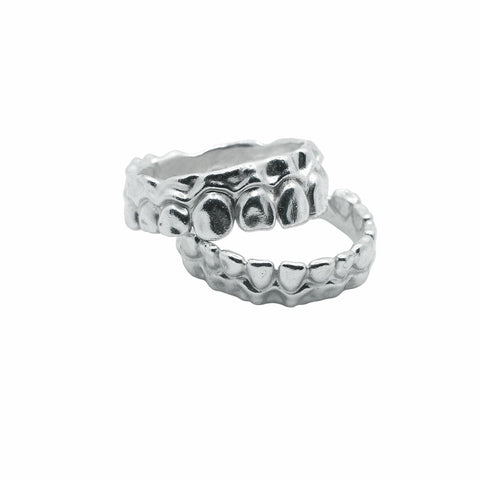
Most designs in this studio exist in two finishes. Same shape, same weight, same silver, two very different objects. This is how to pick.
WHAT OXIDATION IS
Oxidizing is a controlled darkening of the surface. The agent is liver of sulfur, a potassium sulfide mixture that is the standard for this in the trade. It drives the same reaction that slowly tarnishes any silver, only in minutes rather than years, so what you are looking at is silver sulfide on the metal itself and not a colored layer sitting on top. It cannot chip and it cannot peel.
It is applied by hand, piece by piece, and it settles into every recess and texture the design has. On something like the OSMOSIS ring, where the form is built from roses and thorns, the dark areas are what make the detail readable. Take the oxidation away and the shape flattens out.
Because it is done by hand rather than sprayed on, no two pieces come out identical. That is a property of the process, not a tolerance problem.
WHAT POLISHED IS
A polished piece is worked to a bright, hard, even surface at the final stage. Light travels across it instead of getting caught, so what you notice first is the silhouette and the weight rather than the texture. The same ring reads cleaner, sharper, and considerably louder in daylight.
HOW EACH ONE AGES
Nothing here is sealed with a coating, so both finishes keep moving. They just move in opposite directions.
An oxidized piece brightens where you touch it. Knuckle contact, pocket contact, the edge of a desk. The high points come up over months while the recesses stay dark, which sharpens the contrast the longer you wear it.
A polished piece goes the other way. It picks up fine surface marks and a light patina, especially in corners you never rub. Some people polish it back every few weeks. Others let it settle. Both are correct.
WHICH ONE SUITS YOU
Choose oxidized if the design carries heavy texture or a scene, if you want the piece to look worn in rather than new, and if you are comfortable with it changing on you.
Choose polished if you want the piece to read as an object rather than an artifact, if you wear it alongside brighter metal, or if you would rather spend a minute on maintenance than watch the surface drift.
THE PRACTICAL NOTE
Oxidized pieces need a gentler hand with the polishing cloth, because aggressive work lifts the darkness out of areas that were meant to keep it. Polished pieces take a firmer clean. Neither needs anything harsher than mild soap and the cloth in the box.
ONE THING THAT IS NOT A FINISH
A few pieces here are stainless steel, and some are gold plated over steel. Those are a different material rather than a different finish, and they behave differently: steel does not tarnish, and plating eventually wears at the contact points. Where a piece is steel, or where it is produced with a partner workshop rather than made in the studio, that is stated in its product description. Worth reading before you compare two pieces on finish alone.
Compare them directly: the gothic and oxidized rings against the polished collection. Several designs appear in both, so you can see the same piece finished two ways. If you want the chemistry in more detail, read why this silver tarnishes.