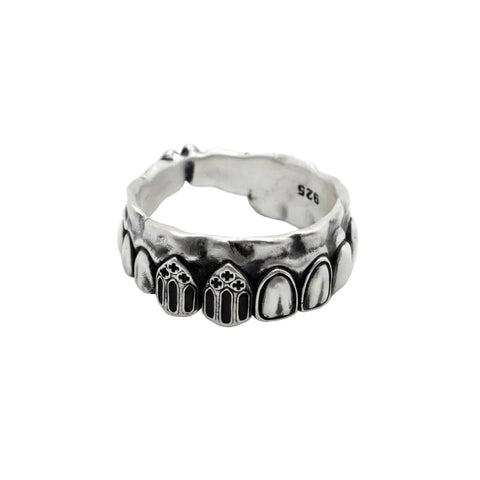
الفضة الإسترلينيّة تسوّد. هذا ليس عيباً وليست علامة على جودةٍ منخفضة. هذا ما تفعله المعدن، وهنا يُسمح له بالحدوث عن قصد.
ماذا تعني 925 في الواقع
الفضة الإسترلينية 925 هي فضة نقية بنسبة 92.5 في المائة، مخلوطة بمعادن أخرى للقوة. الفضة النقية لينة جداً بحيث لا تستطيع الاحتفاظ بشكل الخاتم أو البقاء على قفل، وهذا هو السبب في أن السبائك أصبحت المعيار للمجوهرات التي ترتديها بالفعل. يتم تعريف الرقم في المعايير الدولية، وآخرها ISO 19376-1:2025.
لماذا تسوّد
تتفاعل الفضة مع مركبات الكبريت في الهواء وعلى بشرتك. والنتيجة هي طبقة رقيقة من كبريتيد الفضة على السطح، والتي تبدأ بلون رمادي دافئ ثم تصبح شبه سوداء في التجويفات. الرطوبة تسرع العملية. وكذلك بعض الأطعمة ومستحضرات التجميل وحمامات السباحة.
الأكسدة هي نفس التفاعل، تتم عمداً
إن السواد على القطعة المؤكسدة ليس دهاناً ولا طبقة. إنه نفس كبريتيد الفضة، ويحدث في دقائق بدلاً من سنوات. العامل المستخدم هنا هو كبد الكبريت، وهو المعيار في الصناعة. إنه مزيج من كبريتيد البوتاسيوم الذي يحمل كبريت متاح أكثر بكثير مما يحمله هواء الغرفة. توضع القطعة فيه، يتفاعل السطح، ثم يتم إيقاف التفاعل وشطفه، ويبقى السواد حيثما يريده التصميم.
لهذا نتيجة عملية. لأن اللون هو المعدن نفسه بدلاً من طبقة موضوعة فوقه، فلا يمكن أن يتشقق أو يتقشر. إنه يتآكل. تعود نقاط التلامس إلى الفضة اللامعة على مدى أشهر بينما تحتفظ التجويفات المحمية باللون، وهذا هو السلوك الذي صُممت التصاميم من أجله تماماً.
لماذا لا يوجد طلاء مضاد للتشوه
الكثير من المجوهرات الفضية محكمة الإغلاق بطبقة شفافة صناعية تحافظ على لمعانها على الرف. لا يوجد شيء هنا كذلك. فالطلاء يخفي المعدن، ويتآكل بشكل غير متساوٍ، وبمجرد أن يبدأ بالتقشر، لا توجد طريقة جيدة لإصلاحه دون نزع القطعة بأكملها.
عندما تترك بدون طلاء، يستمر السطح في التغير. يغمق حيث يكون محميًا ويلمع حيث تحتك به يدك. بعد بضعة أشهر يبدو الخاتم وكأنه يخصك بدلاً من صورة. هذا هو السلوك المقصود.
كيفية تنظيفه
ابدأ بـ قطعة قماش التلميع التي جاءت في الصندوق. بالنسبة لمعظم القطع، هذا هو الروتين بأكمله ويستغرق أقل من دقيقة.
إذا احتاج شيء ما إلى المزيد، استخدم ماءً صابونياً خفيفاً وقطعة قماش ناعمة، ثم جففه تماماً قبل التلميع. تجنب الغمس والمواد الكيميائية القاسية والفرك الكاشط، خاصة حول التفاصيل المحفورة والحواف حيث يقوم التشطيب بمعظم العمل.
تحذير واحد للقطع المؤكسدة
على قطعة مصممة لتبدو داكنة، يقوم التلميع القوي بإزالة الأكسدة من التجويفات التي كان المقصود منها الاحتفاظ بها. اعمل ببطء، وفقط على الأسطح البارزة التي تريد تفتيحها. قم بتلميع خاتم مؤكسد مثل خاتم عادي وسوف تسطح التباين الذي يعتمد عليه التصميم.
التخزين الذي يساعد بالفعل
امسح قطعة المجوهرات بعد ارتدائها وخزنها جافة ومغلقة. تعمل الحقيبة التي جاءت مع طلبك، أو أي كيس محكم الإغلاق. كيس صغير من جل السيليكا في الحقيبة يقلل الرطوبة بشكل ملحوظ. أبعد الفضة عن الحمامات الرطبة، وبعيدًا عن الأربطة المطاطية وبعض أنواع الرغوة، التي تطلق الكبريت وتسرع من التآكل.
إذا كنت تفضل أن تبقى القطعة لامعة، فإن مجموعة المصقولة مصممة لتكون ذات لمعان قوي. إذا كنت ترغب في أن يتقدم السطح في العمر، فراجع Requiem أو الخواتم القوطية والمؤكسدة.