يتم صنع كل خاتم هنا بعد طلبه، لذا يتم تحديد الحجم قبل وجود القطعة. لا توجد أدراج للخواتم الجاهزة بأحجام أخرى لتبادلها. الحصول على الرقم الصحيح في المرة الأولى يوفر عليك الإرجاع ويوفر علينا بضعة أسابيع.
يتم تحديد الأحجام كالمحيط الداخلي بالمليمترات، وهو المعيار الألماني والأوروبي. تتراوح معظم القطع من 50 إلى 72، وعدد قليل يصل إلى 74، وتزيد بمقدار اثنين. القائمة الدقيقة لكل تصميم موجودة في قائمة الأحجام المنسدلة الخاصة به.
إذا كنت قد طلبت من هنا من قبل، فلديك بالفعل مقياس خاتم
يتم شحن مقياس خاتم مع كل طلب. إذا كان أحد مقاساتنا قد وصل إليك بالفعل، فهذه الأداة هي الخيار الأكثر دقة لديك في المنزل، لأنها تقرأ بنفس مقياس المليمتر الذي تُقتبس به الأحجام. ضعه على الإصبع الذي تريد ارتداء القطعة الجديدة عليه، بعد المفصل، واقرأ الرقم حيث ينغلق بشكل مريح.
الطريقة الأولى: قياس خاتم تمتلكه بالفعل
إذا كان لديك خاتم يناسب إصبعك بالفعل، فاستخدمه. ضعه مسطحًا وقم بقياس المسافة الداخلية عبر أوسع نقطة، من الحافة الداخلية إلى الحافة الداخلية. هذا هو القطر الداخلي. اضربه في 3.14 وستحصل على المحيط، وهو رقم المقاس.
قم بالقياس مرتين. على هذا المقياس، نصف مليمتر من القطر يحركك بمقدار مليمتر ونصف من المحيط، وهو قريب من خطوة كاملة، لذا من المهم أن تكون حذرًا مع المسطرة.
الطريقة الثانية: الشريط الورقي
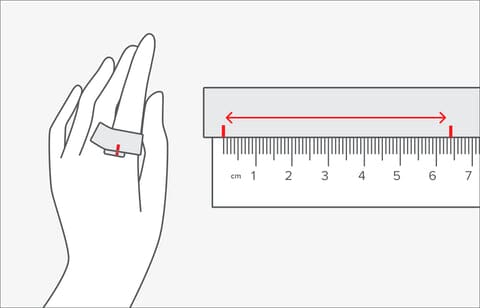
قص شريطًا ضيقًا من الورق، لا يزيد عرضه عن نصف سنتيمتر تقريبًا، بحيث يمكن أن يلتصق بالجلد بشكل مسطح. لفه حول قاعدة الإصبع، محكمًا ولكن ليس ضيقًا، وضع علامة حيث تتداخل الأطراف. افرد الشريط واقرأ الطول بالمليمترات. هذا هو محيطك.

هناك شيئان مهمان هنا. اسحب الشريط بإحكام بقدر ما ترغب في أن يستقر الخاتم، لأن الورق سيلتصق بالجلد ويزودك بحجم صغير جدًا. وتأكد من أن الحلقة لا تزال تنزلق فوق المفصل. عادة ما يكون المفصل هو النقطة الأوسع، والخاتم الذي يناسب قاعدة الإصبع تمامًا لا فائدة منه إذا لم يتمكن من الوصول إلى هناك.
الطريقة الثالثة: الخيط أو خيط الأسنان
نفس فكرة الشريط الورقي، مفيد إذا لم يكن لديك مقص في متناول اليد. لفه مرة واحدة حول الإصبع، وحدد التداخل بقلم، ثم افردها على مسطرة.
تنبيه واحد: الخيط يتمدد، والخيوط تتمدد أكثر. إذا سحبته أثناء القياس، فستقرأ رقمًا أصغر مما هو عليه الإصبع بالفعل. خيط الأسنان والورق كلاهما أفضل سلوكًا من خيط الخياطة. إذا كان الخيط هو كل ما لديك، فقم بالقياس ثلاث مرات وخذ أكبر قراءة.
إذا كانت مسطرتك لا تقيس بالمليمترات
السنتيمترات سهلة: اضرب في 10. شريط بطول 5.6 سم هو 56، وهو حجم نصنعه. البوصات تتطلب خطوة واحدة إضافية: اضرب في 25.4. شريط قياس 2.2 بوصة هو 55.9 مم، أي 56 مرة أخرى. الجدول أدناه يحتوي على كلا العمودين حتى لا تضطر إلى إجراء العمليات الحسابية.
جدول المقاسات
العمود الأيسر هو الرقم الذي تختاره في القائمة المنسدلة. إذا وقع قياسك بين صفين، فاقرأ الملاحظة حول العرض قبل أن تقرر.
| الحجم (المحيط الداخلي بالمليمتر) | القطر الداخلي (مم) | المحيط (سم) | المحيط (بوصة) | المقاس الأمريكي |
|---|---|---|---|---|
| 50 | 15.9 | 5.0 | 1.97 | 5.25 |
| 52 | 16.6 | 5.2 | 2.05 | 6 |
| 54 | 17.2 | 5.4 | 2.13 | 6.75 |
| 56 | 17.8 | 5.6 | 2.20 | 7.5 |
| 58 | 18.5 | 5.8 | 2.28 | 8.5 |
| 60 | 19.1 | 6.0 | 2.36 | 9.25 |
| 62 | 19.7 | 6.2 | 2.44 | 10 |
| 64 | 20.4 | 6.4 | 2.52 | 10.75 |
| 66 | 21.0 | 6.6 | 2.60 | 11.5 |
| 68 | 21.6 | 6.8 | 2.68 | 12.25 |
| 70 | 22.3 | 7.0 | 2.76 | 13 |
| 72 | 22.9 | 7.2 | 2.83 | 14 |
| 74 | 23.6 | 7.4 | 2.91 | 14.75 |
نظرًا لأن النطاق يتدرج بزيادات قدرها اثنان، فإن قياس 57 يقع بين مقاسين بحكم التعريف. وهذا أمر طبيعي ولهذا السبب توجد الأقسام التالية.
متى تقيس
تتغير الأصابع على مدار اليوم وعلى مدار العام. تكون أصغر في البرد وفي الصباح، وأكبر في الحرارة وبعد التمرين أو تناول الأطعمة المالحة. قس في المساء في درجة حرارة الغرفة العادية وستكون أقرب إلى مقاسك اليومي. إذا حصلت على قراءتين مختلفتين في يومين مختلفين، فخذ القراءة الأكبر.
العرض يغير المقاس
الحلقة العريضة تكون أضيق من الحلقة الضيقة بنفس الحجم الاسمي، لأنها تغطي مساحة أكبر من الإصبع ولديها مساحة أقل للثني. العديد من القطع هنا عريضة وثقيلة عمدًا. إذا كنت تطلب شيئًا عريضًا وكنت بين مقاسين، فخذ المقاس الأكبر.
إذا كنت بين مقاسين
اذهب إلى الأكبر. الخاتم الذي يمكنك ارتداؤه بالفعل وارتدائه طوال اليوم أفضل من خاتم يقاس بشكل صحيح على الورق. بالنسبة للقطعة التي تنوي ارتداءها يوميًا بدلاً من عرضيًا، فإن الراحة تفوز دائمًا.
ما زلت غير متأكد
سيقوم صائغ محلي بقياسك في دقيقة باستخدام مجموعة من الخواتم الفولاذية، وهي أدق قراءة ستحصل عليها في أي مكان. أو أرسل رسالة قبل الطلب واصفًا ما قسته وبأي طريقة. يستغرق الإنتاج ما بين 5 و 45 يومًا اعتمادًا على القطعة ومدى انشغال الورشة، لذا هناك متسع من الوقت لتسوية هذا الأمر قبل قطع أي شيء.
عندما تكون جاهزًا، تتوفر المجموعة الكاملة في الخواتم الفضية، والعمل الداكن في الخواتم القوطية المؤكسدة. إذا كنت تختار بين التشطيبات، فاقرأ مؤكسد أو مصقول.